
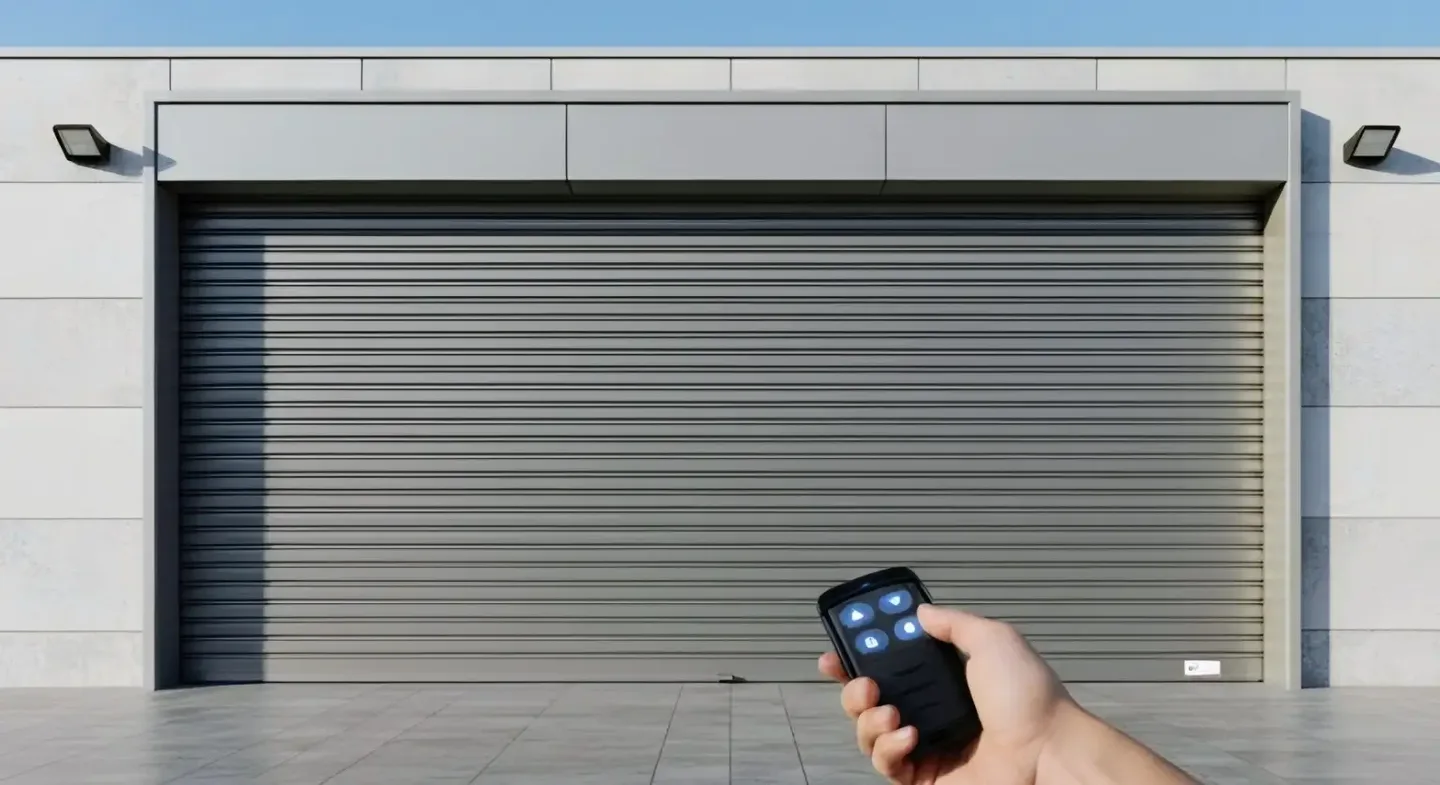
The Shift from Manual Labor to Shutter Automation in Eastern India
Across modern industrial corridors—such as Liluah, Dhulagarh, Dankuni, and Salt Lake Sector V—facility managers are replacing manual spring-loaded shutters with motorized automation. Operating large manual shutters causes repetitive strain injuries, workplace accidents, and severe operational delays during peak loading hours.
However, selecting the wrong motor drive can result in frequent thermal shutdowns or costly maintenance headaches. At Ideal Shutters Automation Private Limited, we equip our motorized rolling shutters and Indian motor doors with precision-matched automation drives.
The two most common automation drives are external side-mounted industrial motors and internal concealed tubular motors. Understanding their core mechanical differences ensures you select the correct drive for your building geometry and duty cycle.
Side-Mounted Industrial Motors: High-Torque Powerhouse for Factories
Side motors are mounted on heavy structural steel end-plates directly beside the winding barrel. The motor drives the axle shaft through a high-strength duplex roller chain and reduction sprocket.
Key Advantages: 1. Immense Lifting Capacity: Available in 300 kg, 600 kg, 800 kg, 1,000 kg, and 2,000 kg capacities. They effortlessly lift heavy 16 SWG galvanized curtains spanning up to 12 meters wide. 2. Endless Haul-Chain Manual Override: During power cuts across West Bengal, a technician or security guard pulls the built-in drop chain. The reduction gear allows a 1,000 kg shutter to be raised manually with less than 15 kg of pulling effort. 3. Service Accessibility: Because the motor is mounted outside the barrel, routine grease inspection, limit switch adjustments, and brake servicing can be performed from a ladder without dismantling the curtain or axle. 4. Safety & Brake Security: Equipped with heavy electromagnetic fail-safe disc brakes that instantly engage if power is interrupted, preventing curtain free-fall.
Concealed Tubular Motors: Sleek, Whisper-Quiet Architecture
Tubular motors are cylindrical drives installed entirely inside the hollow steel axle barrel. The curtain wraps directly over the motor body, making the drive completely invisible from the outside.
Key Advantages: 1. Zero Side Clearance Required: Standard side motors require at least 250 mm to 350 mm of side jamb clearance. Tubular motors require only 30 mm to 50 mm, making them indispensable for tight retail storefronts in shopping malls and urban arcades. 2. Whisper-Quiet Operation: Running on planetary reduction gearboxes, tubular motors produce less than 45 dB of acoustic noise—ideal for residential garages in New Town, corporate boardrooms, and hospital pharmacies. 3. Clean Architectural Aesthetic: No visible chains, brackets, or bulky motor boxes.
Important Operational Considerations: Tubular motors have an intermittent duty cycle rating (typically 4 minutes). If an operator runs the shutter up and down four times consecutively, the internal thermal sensor trips to prevent motor burnout. Hence, tubular motors are ideal for retail shops opened twice daily, but unsuitable for high-traffic warehouse loading bays.
Central Drum Motors (Indian Motor Style): The Hybrid Alternative
Central drum motors are clamped around the central shaft inside a conventional counterbalanced spring barrel. Widely popular across Kolkata's commercial markets: - They retain the helical counterbalance springs, meaning the motor only needs to overcome mechanical friction rather than the full dead weight of the curtain. - In a power outage, turning a manual release knob disconnects the motor clutch, allowing the user to lift the shutter manually like a standard push-pull system. - Best suited for medium-sized commercial retail outlets (up to 200 sq.ft) seeking affordable automation without major structural alterations.
Maintenance and Troubleshooting Recommendations
To guarantee a 10 to 15-year operational lifespan from your motor system: - Bi-Annual Limit Switch Inspection: Ensure mechanical limit switches accurately stop the curtain at full open and floor seal levels to prevent motor stalling. - Electromagnetic Brake Check: Verify the disc brake engages crisply without slipping when stopping mid-travel. - Safety Sensor Cleaning: Keep infrared safety beams clear of industrial dust to prevent false obstacle reversals. - If your motor hums without lifting or stalls intermittently, contact our dedicated rolling shutter repair team in Kolkata for immediate factory dispatch.